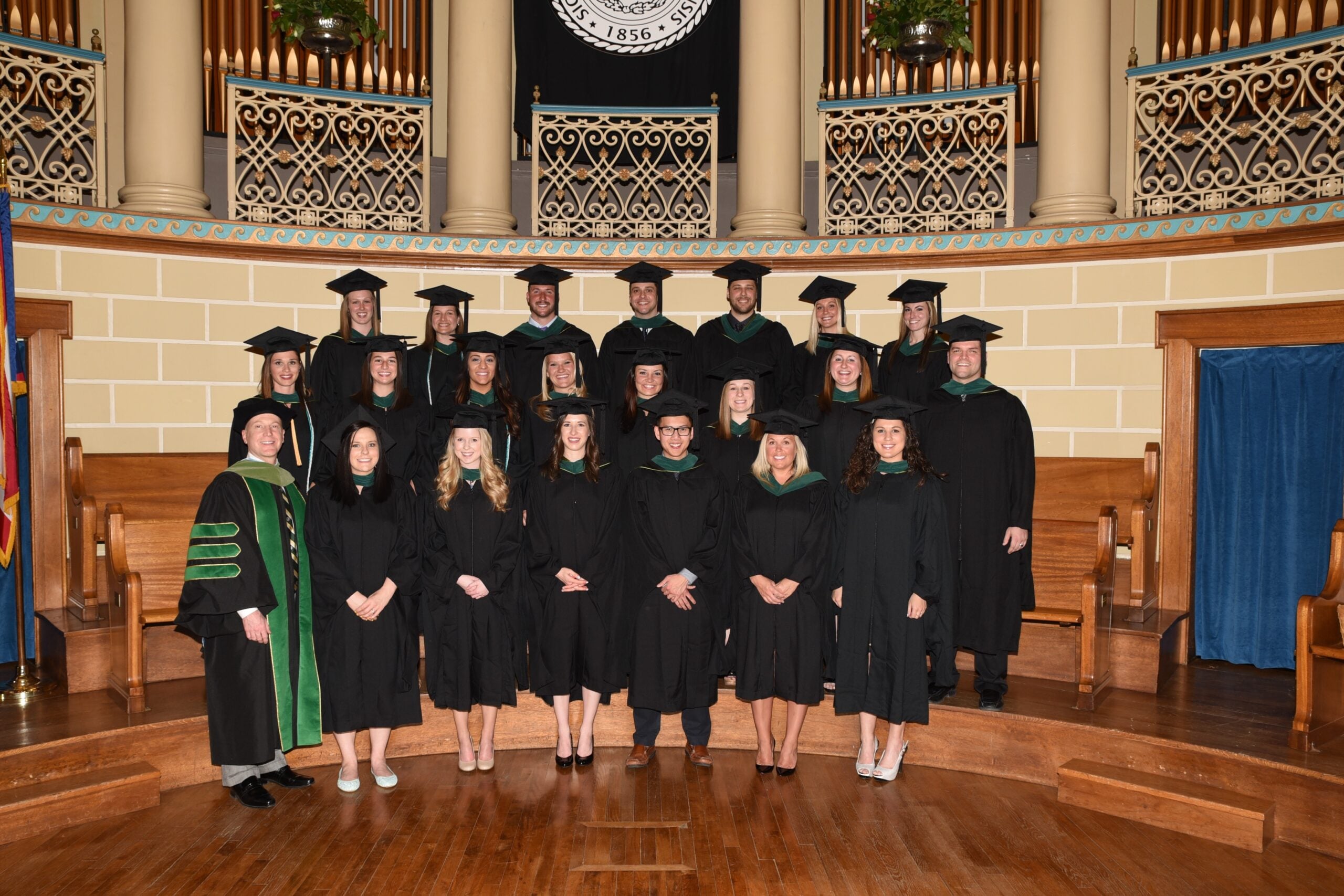

Joseph Weber, DHSc, MBA, MPAS, PA-C, exemplifies the power of following one’s true calling, even when it requires abandoning established success to pursue a lifelong dream. His remarkable journey from computer engineer to physician associate/physician assistant (PA) to founding program director has shaped the lives of hundreds of students and contributed significantly to the development of the PA profession.
Early Life and Family Influence
Weber is a first-generation college student and the only member of his immediate family to earn a doctorate. Growing up in Cleveland, Ohio, in a large Italian household on his mother’s side, he was profoundly shaped by strong family bonds and the wisdom of his elders. Family meals were more than sustenance; they were opportunities for connection, tradition, and learning. His grandfather, Herman Myers, despite having only a sixth-grade education, proved to be Weber’s most influential early role model. Though limited by formal schooling, Herman possessed remarkable foresight and encouraged his grandson to pursue higher education. Decades before computer technology became ubiquitous, Herman told young Joseph that computers would shape the future—wisdom that would ultimately guide his initial career path.
This Italian heritage instilled in Weber values of hard work, perseverance, and the transformative power of education. These principles became the foundation of his life and professional career. His family also included his uncle, Ernest L. Mazzaferri Sr., MD, a highly decorated endocrinologist whose dedication to medicine would inspire Weber’s own eventual entry into healthcare.
First Career: Technology and Business
Inspired by his grandfather’s prescience about technology, Weber’s mechanical and hands-on nature led him to pursue computer engineering. He received his associate degree in applied business from Lakeland Community College in 1986, followed by a bachelor’s degree in management science from Chancellor’s University in 1987. He then earned his MBA from Case Western Reserve University in 1989. During that time, he wrote one of the first papers on artificial intelligence (AI)—foreshadowing his later work integrating AI into medical education.
Weber’s technology career flourished with positions at major corporations, including Microsoft, where he managed multi-million-dollar budgets and earned recognition as a skilled computer programmer and developer. Success came early and steadily. Yet throughout this prosperous period, another passion simmered beneath the surface—medicine. When choosing between computer engineering and medicine in his youth, he had selected technology, but the dream of healthcare never truly faded.
The Pivotal Midlife Career Change
At approximately age 40, while consulting with the Cleveland Clinic, Joseph Weber experienced the moment that would redirect his entire life. Working closely with talented physicians at this prestigious institution reignited his dormant passion for medicine. Immersed in the healthcare environment and inspired by the incredible work he witnessed, Weber made a courageous decision: he would leave his established, lucrative career in technology and business to return to school and become a PA.
Walking away from financial security, professional standing, and the comfort of a known career path to become a student again in his 40s was profoundly challenging. Yet Weber describes this difficult decision as one of the greatest blessings of his life. In 2009, he earned his master’s degree in physician assistant studies from Gannon University in Erie, Pennsylvania, becoming a certified PA-C. His unique background—combining computer engineering expertise with business acumen and now, medical knowledge—positioned him well in the PA field.
Founding Programs and Educational Leadership
After completing his PA degree, Weber discovered that what most deeply fulfilled him was teaching and shaping the next generation of PAs. In 2011, Weber became the founding program director and associate professor at Lake Erie College in Painesville, Ohio. Over five years, he established the institution’s first PA program from inception, navigating the complex ARC-PA accreditation process, developing comprehensive curricula, hiring exceptional faculty, designing state-of-the-art facilities, and establishing clinical partnerships. His work was recognized when Lake Erie College students honored him by naming their PA society after him—a gesture that deeply moved him.
Building on this success, Weber served as department chair and founding program director at Presbyterian College in South Carolina from 2016 to 2022. Here, he replicated his success, establishing a second PA program from the ground up, developing the School of Health Professions, and engaging in strategic planning. Both programs have graduated hundreds of PAs who continue serving communities across the United States. Weber completed his Doctor of Health Science degree at A.T. Still University (ATSU) in 2014, with a focus on Global Health.
Teaching Excellence and Doctoral Education
Recognizing Weber’s expertise and contributions to PA education, ATSU invited him to serve as adjunct associate professor in their Doctor of Medical Sciences program beginning in 2019. In this role, he teaches research methods, health economics, and capstone seminars to doctoral students—the next generation of PA leaders. His teaching excellence has been recognized with three Golden Apple Adjunct Faculty Teaching Awards. In 2023-2024, Weber served as interim program director and principal faculty at Ursuline College. Currently, he serves as professor and director of program assessment at Franklin Pierce University, where he teaches pharmacology and leads program assessment initiatives to ensure accreditation compliance.
Contributions to the PA Profession
Recognizing his unique background, Joseph Weber has been a thought leader in integrating artificial intelligence and computer engineering principles into PA medical education. He has trained faculty on AI utilization for course preparation, examination development, and advanced qualitative and quantitative analysis. This interdisciplinary approach reflects his own remarkable journey through technology, medicine, and education.
Weber’s commitment to diversity and inclusion in the PA profession was demonstrated through his service on the South Carolina Physician Assistant Association Diversity Committee from 2019 to 2022. He has also contributed through peer-reviewed publications, including work on simulation-based medical education and intracranial complications of sinusitis in children.
Community Service and Personal Values
Beyond academia, Weber has demonstrated a deep commitment to community service. He has served on the boards of trustees for the Lake County Free Clinic, Lifeline of Lake County, and the Lake Health Hospital Foundation. Since 2005, he has served as a senior ordained college and hospital lay chaplain with the International Alliance of Chaplain Corps. He has also participated in community development initiatives, including the City of Clinton’s Main Street Revitalization Project and the Laurens County Coalition for a Healthy and Vibrant Community.
Weber holds a 1st degree black belt from the American Karate Association. He has also been recognized with numerous awards, including the Lakeland Community College Teacher of the Year Award, induction into the Lakeland Community Collee Alumni Hall of Fame, and the Lake Erie College Board of Trustees Award of Commendation.
Legacy and Current Focus
As he approaches retirement, Joseph Weber is branching into new areas that integrate his diverse passions and experiences. He recently completed his training as a senior fitness coach and a certified brain health trainer and plans to expand his chaplaincy work in hospitals and colleges. He and his wife, Jennifer, are preparing a therapy dog to accompany him on hospital visits, combining his healthcare background with spiritual care. He continues restoring classic cars—a hands-on mechanical pursuit that connects him to the passions of his youth. Together, he and Jennifer plan to travel extensively, exploring new cultures while maintaining healthcare connections through chaplaincy and therapy dog work.
Dr. Weber’s legacy in the PA profession extends far beyond the two programs he founded or the thousands of students he has educated. His life demonstrates the transformative power of pursuing one’s true calling, the importance of bridging disciplines, and the profound impact one educator can have on the future of a profession. His contributions will continue to multiply through the PAs he trained, who serve communities nationwide, representing a legacy of healing, education, and excellence that will extend far into the future.
Acknowledgments:
This biography was written by Randy Danielsen with the assistance of Joseph Weber. It was submitted to the Society in January 2026. All photographs are courtesy of Dr. Weber.
When using information from this biography, please provide the proper citation as described within the PA History Society Terms of Use.
To request the use of the photographs that accompany this biography, please contact the PA History Society to request permission as some photographs might have restrictions on their use.